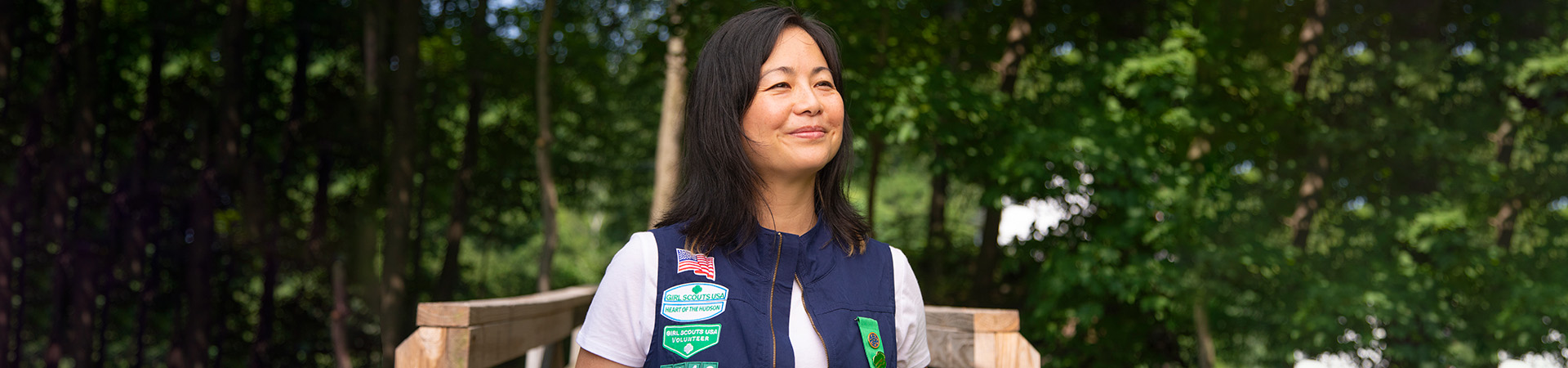
Girl Scouts was founded in 1912 by trailblazer Juliette Gordon Low. We are the largest girl-serving organization in the United States and the largest member of the World Association of Girl Guides and Girl Scouts, a sisterhood of close to 10 million girls and adults in 145 countries.
Our Mission
Girl Scouts builds girls of courage, confidence, and character, who make the world a better place.
Our Vision
Girl Scouts strives to be the premier leadership organization for girls and experts on their growth and development.
The Girl Scout Leadership Experience
We have identified three keys to leadership: girls discover themselves and their values; connect with others; and take action to make the world a better place. At Girl Scouts, everything centers on the girl: activities are girl-led, which gives girls the opportunity to learn by doing in a cooperative learning environment.
More than 3 Million Strong
We are urban, rural, and suburban. We are in schools, churches, temples, mosques, public housing, foster homes, and detention centers. We are in virtually every zip code and in 90 countries around the world.
- 2.3 million girls 5 to 18 years of age
- 16,000 Girl Scouts overseas
- 880,000 adult volunteers
- 50 million alumnae
- 112 councils throughout the United States
At any given point in time, approximately 10 percent of girls are Girl Scouts, and
- 80 percent of women business owners were Girl Scouts.
- 69 percent of female U.S Senators were Girl Scouts.
- 67 percent of female members of the House of Representatives were Girl Scouts.
- Virtually every female astronaut who has flown in space was a Girl Scout.
- 100 Years Young - We are about to celebrate a century of trailblazing, of leadership, of fun and friendship—and we’re just getting started. Find out more at www.girlscouts.org.
Girl Scouts prepare girls for today and tomorrow
Times have changed since 1912, however the foundation of the Girl Scout program was not. “To be successful in the 21st century children and youth need access to experiences… that will help them develop the skills to understand, interpret, and utilize knowledge in the `real world.” Girl Scouts prepare girls for today and tomorrow by providing this type of learning experience. Educators, government and private industry describe the most important skills, knowledge, and behaviors “students” will need to be successful in the work environment and life.
- Good communication skills
- Teamwork
- Building relationships
- Thinking creatively
- Strong ethics
- Thinking critically
- Problem-solving skills
- Application of knowledge
- Ability to innovate
- Positive attitude
Girl Scouts: A National Example for 21st Century Learning
Girl Scouts give girls life skills, primarily by engaging girls and teaching them to apply a learning and decision-making process, rather than by directing them to participate in any specified type of activity. All Girl Scout activities are designed so that girls will:
- Decide what activities they want to learn or do (girl-driven).
- Work in small groups and teams to discuss, debate, discover, practice, and teach (cooperative learning).
- Reflect on their activities and use experience to guide further plans and actions (experiential learning).
Girl Scouting has a long history of partnering with parents, schools, and the community to prepare girls, both personally and as leaders, to succeed in school and in life. Grounded in the Girl Scout Promise and Law, Girl Scouts’ non-formal, experiential, and cooperative learning program promotes girls’ personal growth and leadership development.
These skills areas are congruent with 21st Century Skills: Ready by 21 identified by the Forum for Youth Development and reflected by the efforts of the Partnership for 21st Century Skills.