
Volunteer Essentials

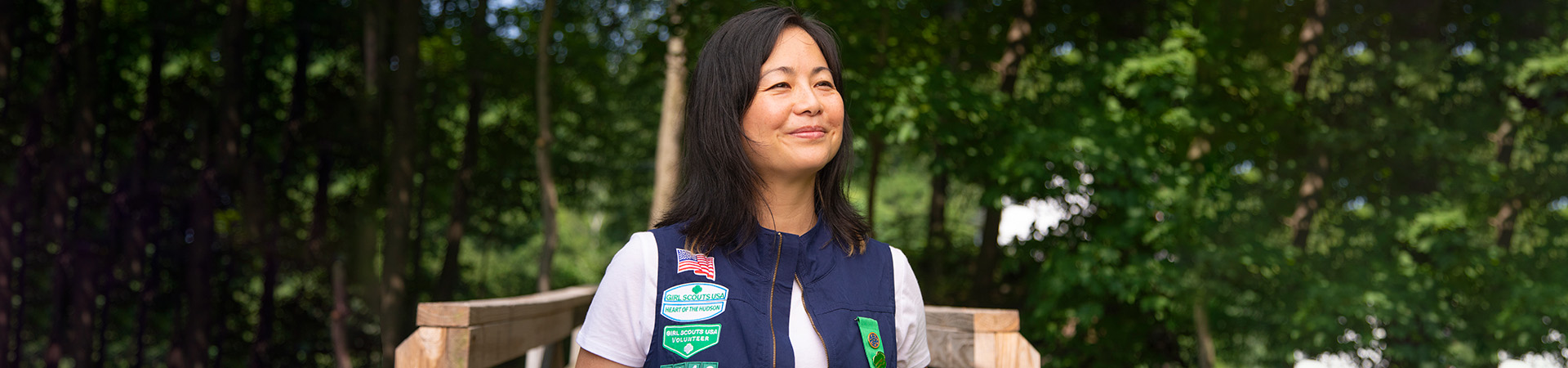

A big THANK YOU for saying yes to Girl Scouting. Welcome to a great adventure in changing girls’ lives and in changing yours. Are you ready for unlimited fun and adventure? Are you ready to laugh, make new friends, and build leaders? Girl Scouting will challenge you, encourage you, and at times you’ll wonder, “What did I get myself into?” We know you’re busy, and we are excited that you are helping girls find their wow and dream big.
This guide, Volunteer Essentials, is your reference for all things Girl Scouts. Think of this as your encyclopedia to Girl Scout volunteering. When you have a question, start with Volunteer Essentials. The answer is closer than you think!
Get started by browsing through these sections:
© Copyright 2009–2022 Girl Scouts of the United States of America. All rights reserved. All information and material contained in Girl Scouts’ Volunteer Essentials guide (“Material”) is provided by Girl Scouts of the United States of America (GSUSA) and is intended to be educational material solely to be used by Girl Scout volunteers and council staff. Reproduction, distribution, compiling, or creating derivative works of any portion of the Material or any use other than noncommercial uses as permitted by copyright law is prohibited, unless explicit, prior authorization by GSUSA in writing was granted. GSUSA reserves its exclusive right in its sole discretion to alter, limit, or discontinue the Material at any time without notice.
